
Highway & Expressway Subsidence Repair — Under-Road Void Filling with Polyurethane, Overnight
A settled highway/expressway surface caused by voids and weak soil beneath the pavement. URETEK filled the voids and stabilized the ground by polyurethane injection — working overnight with standard traffic-lane control, no resurfacing, and fast reopening. Body (TH)
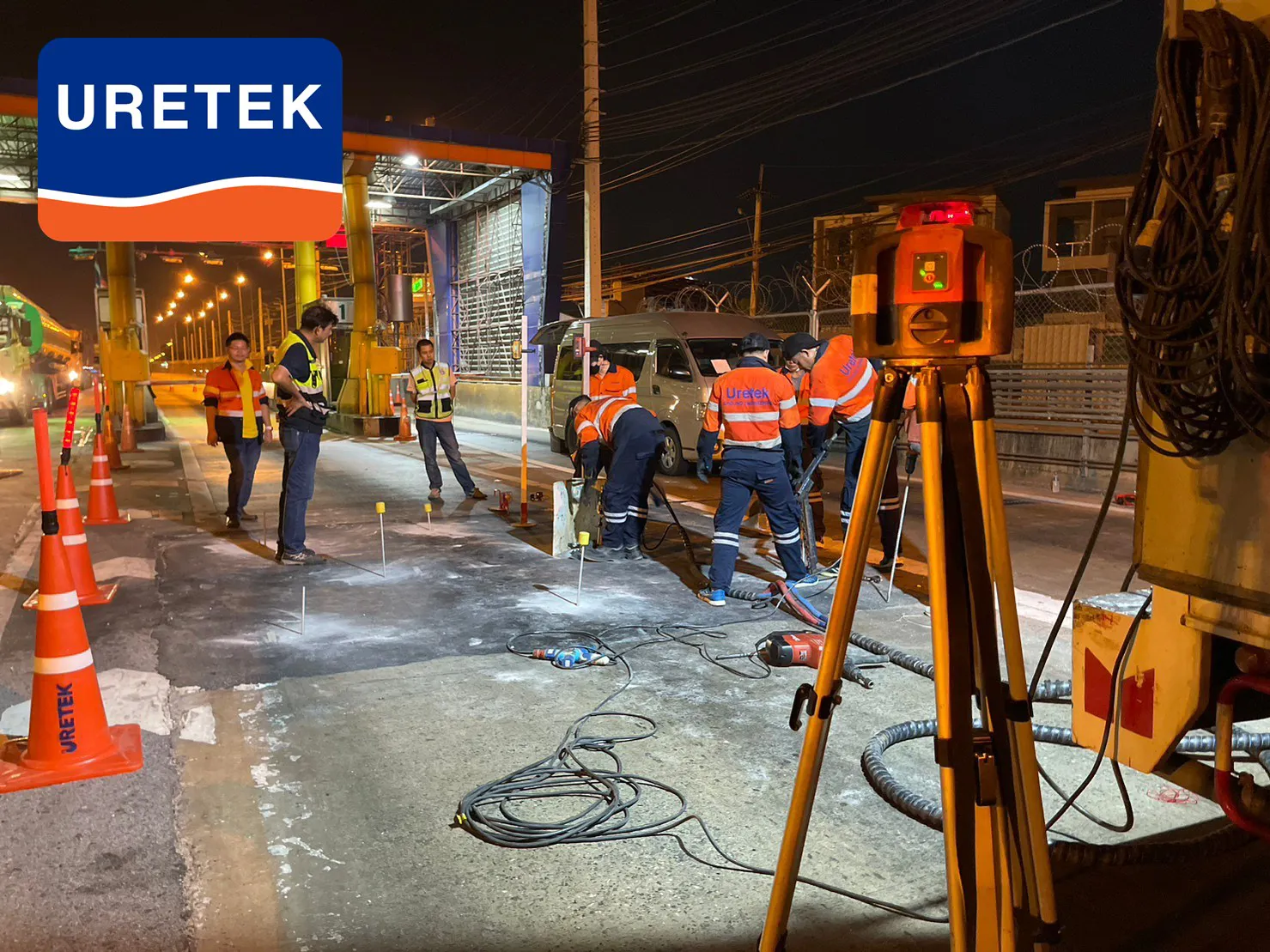
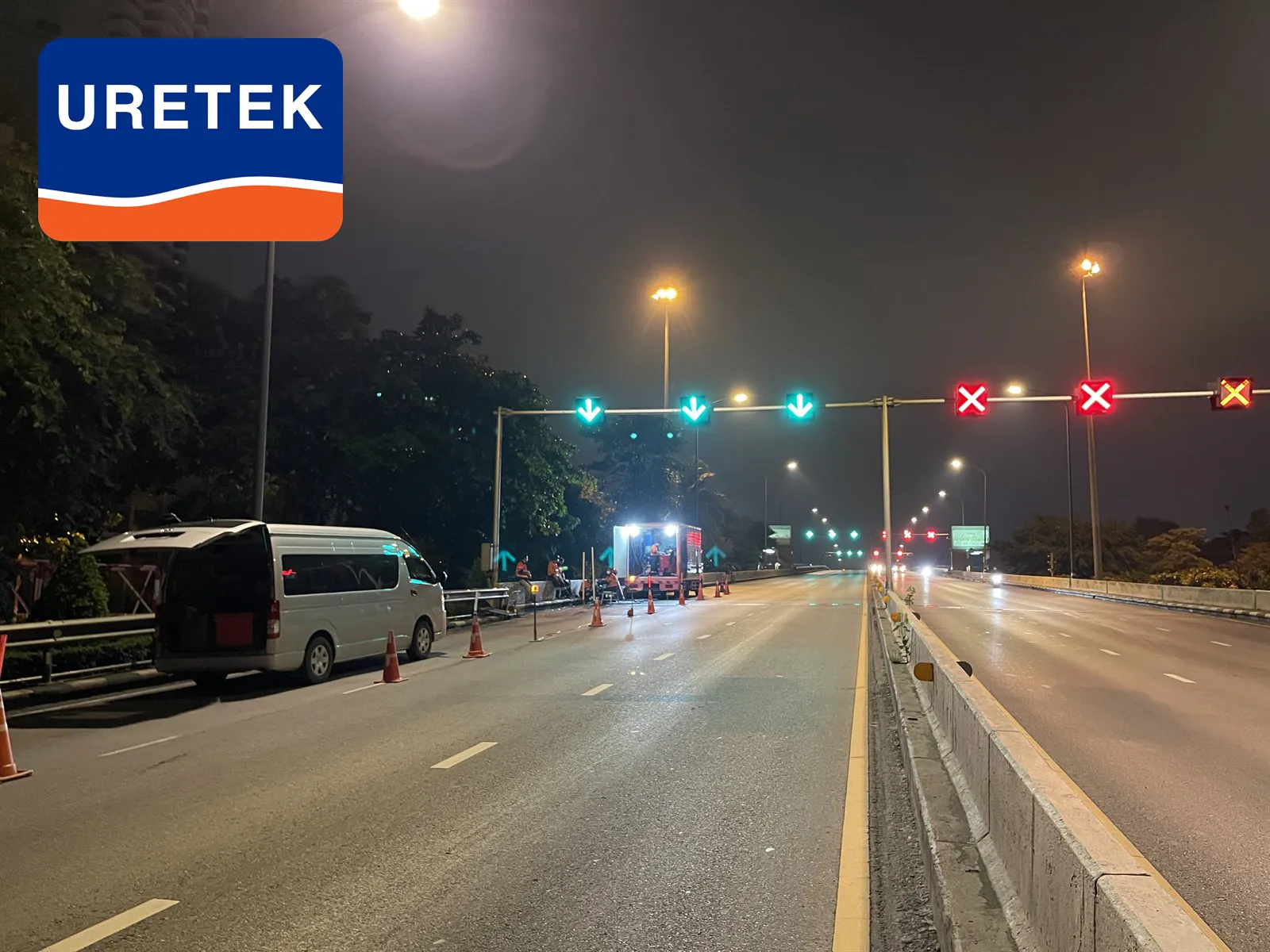
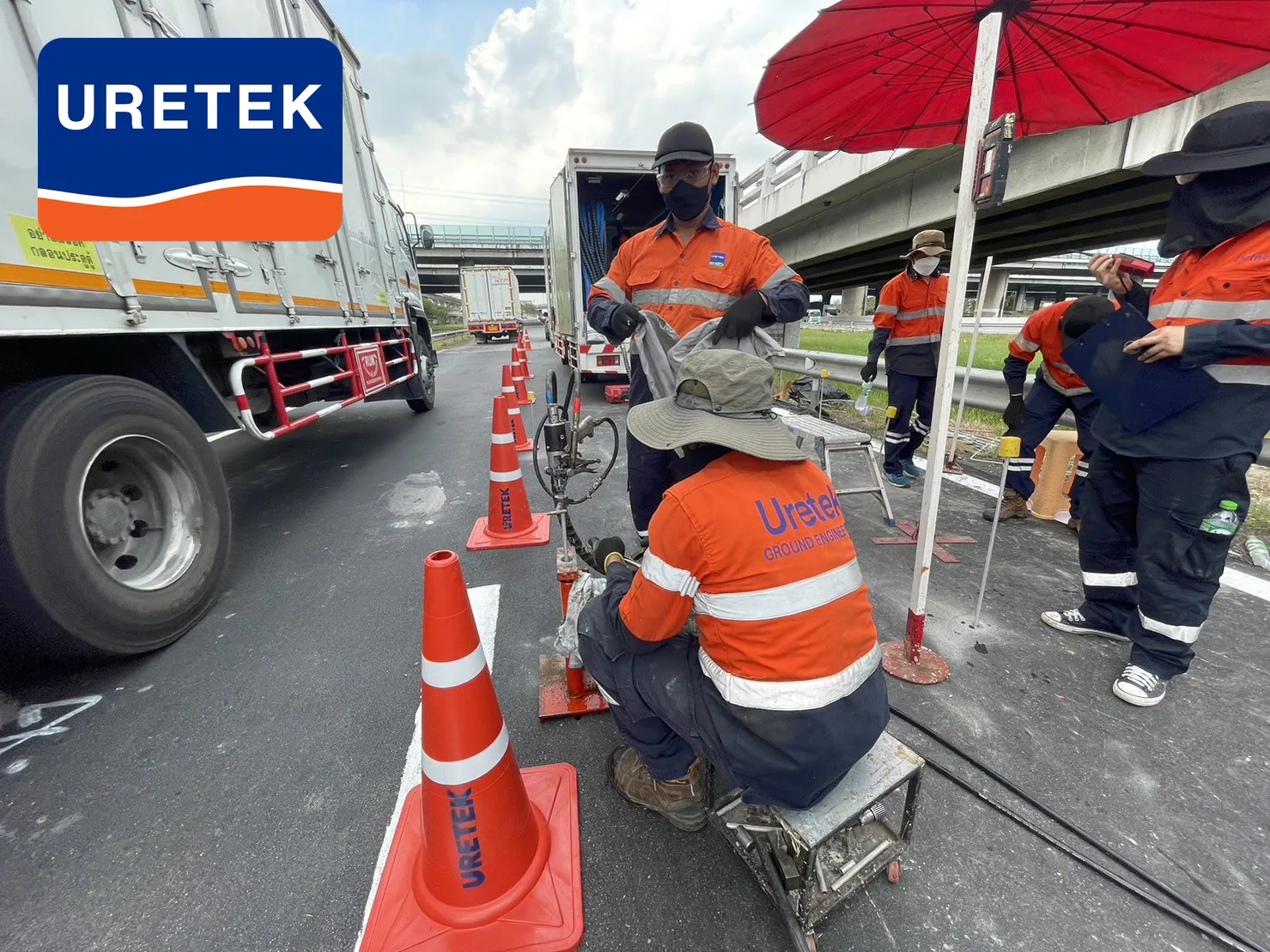
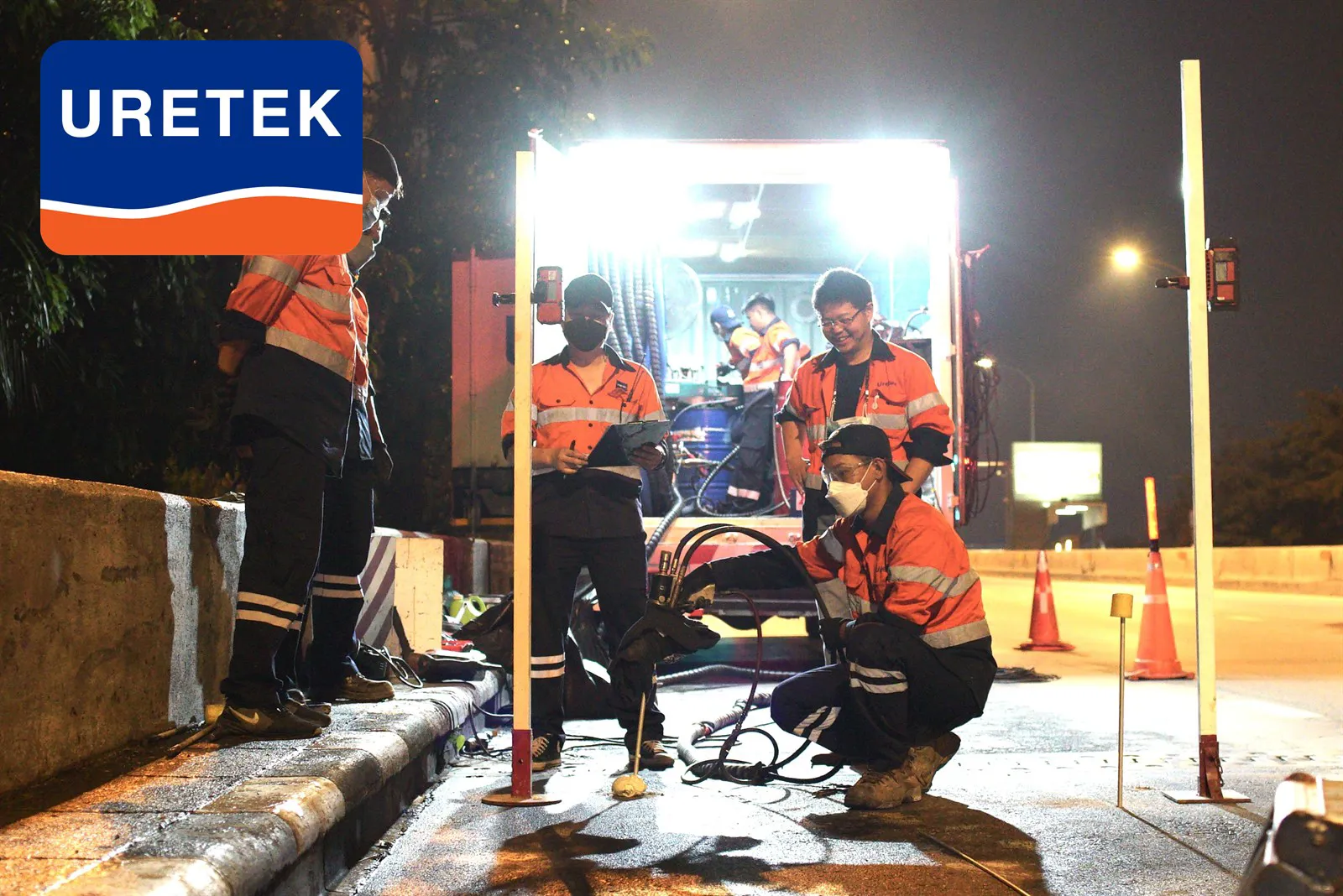
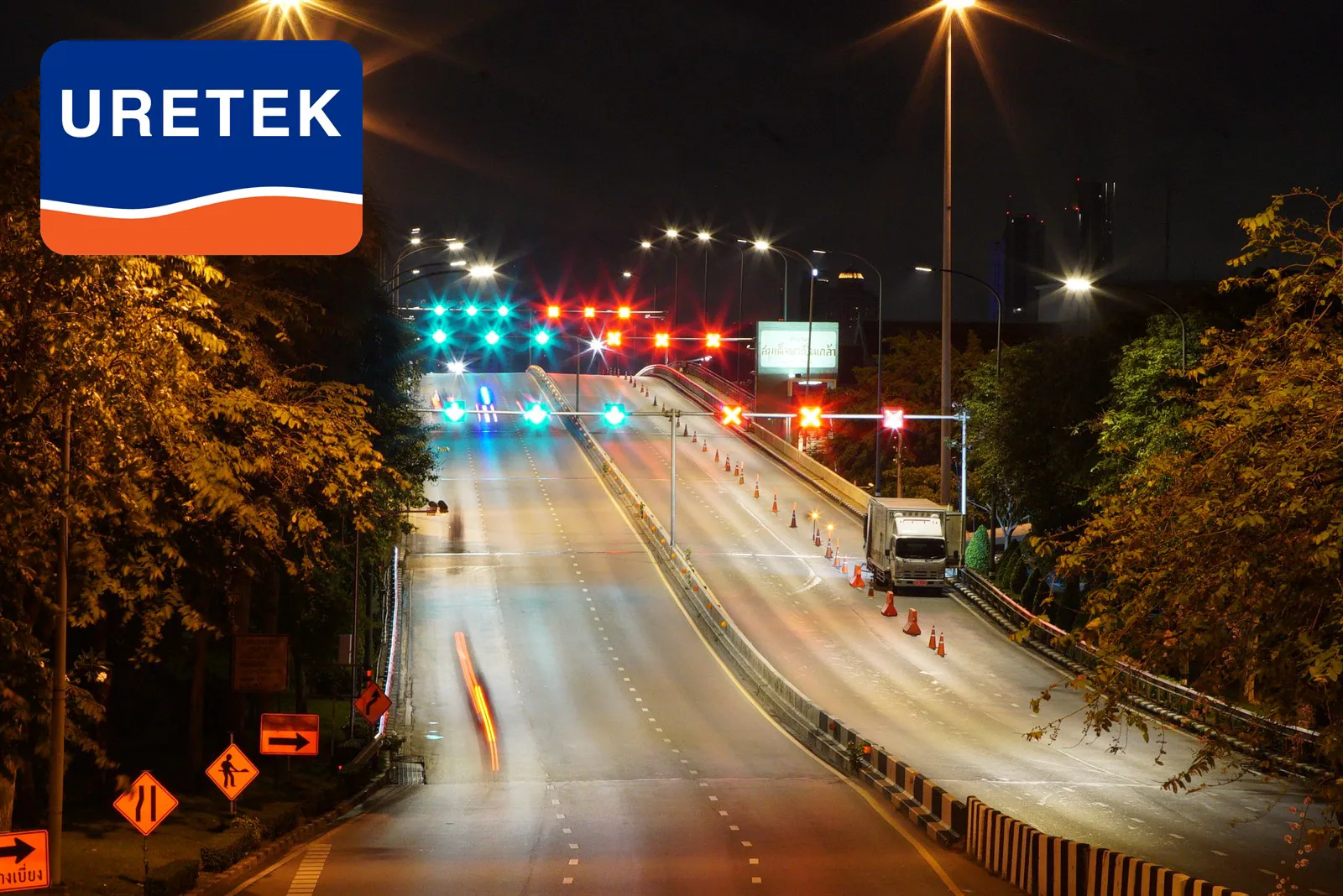
Highways and expressways carry heavy traffic around the clock. When the sub-base or embankment beneath the surface subsides or is washed out and voids form, the surface starts to settle and crack. A rip-and-replace repair means closing lanes for days, so URETEK uses polyurethane under-road void filling — done overnight with fast reopening.
🛣️ Why Roads Settle
The sub-base or embankment subsides or is eroded by water, creating voids beneath the surface, so the pavement loses support and settles — especially where water pools or near pipelines.
🚧 Standard Lane Control, Overnight Work
Cones, signs and lane-closure signals are set to safety standards, and the crew works overnight when traffic is light, closing only the necessary lanes.
💠 Polyurethane Injection to Fill Voids & Compact the Ground
Small holes are drilled through the surface and polyurethane resin injected beneath it; the resin expands to fill voids, compact the sub-base, and re-level the surface — with no resurfacing, controlled by laser.
✅ The Result: A Stable Road, Quickly Reopened
The voids are filled, the pavement carries load again, the small holes sealed flush, and traffic reopens quickly — reducing impact on road users and the cost of road closures.
Have a similar problem to solve?
Our engineers are ready for a free site assessment.